A river photograph can give you two landscapes for the price of one. There is the bank itself, with its trees and uneven edges, and then there is the version the water makes of it. The second landscape is less dependable. One little disturbance can pull a whole tree apart.
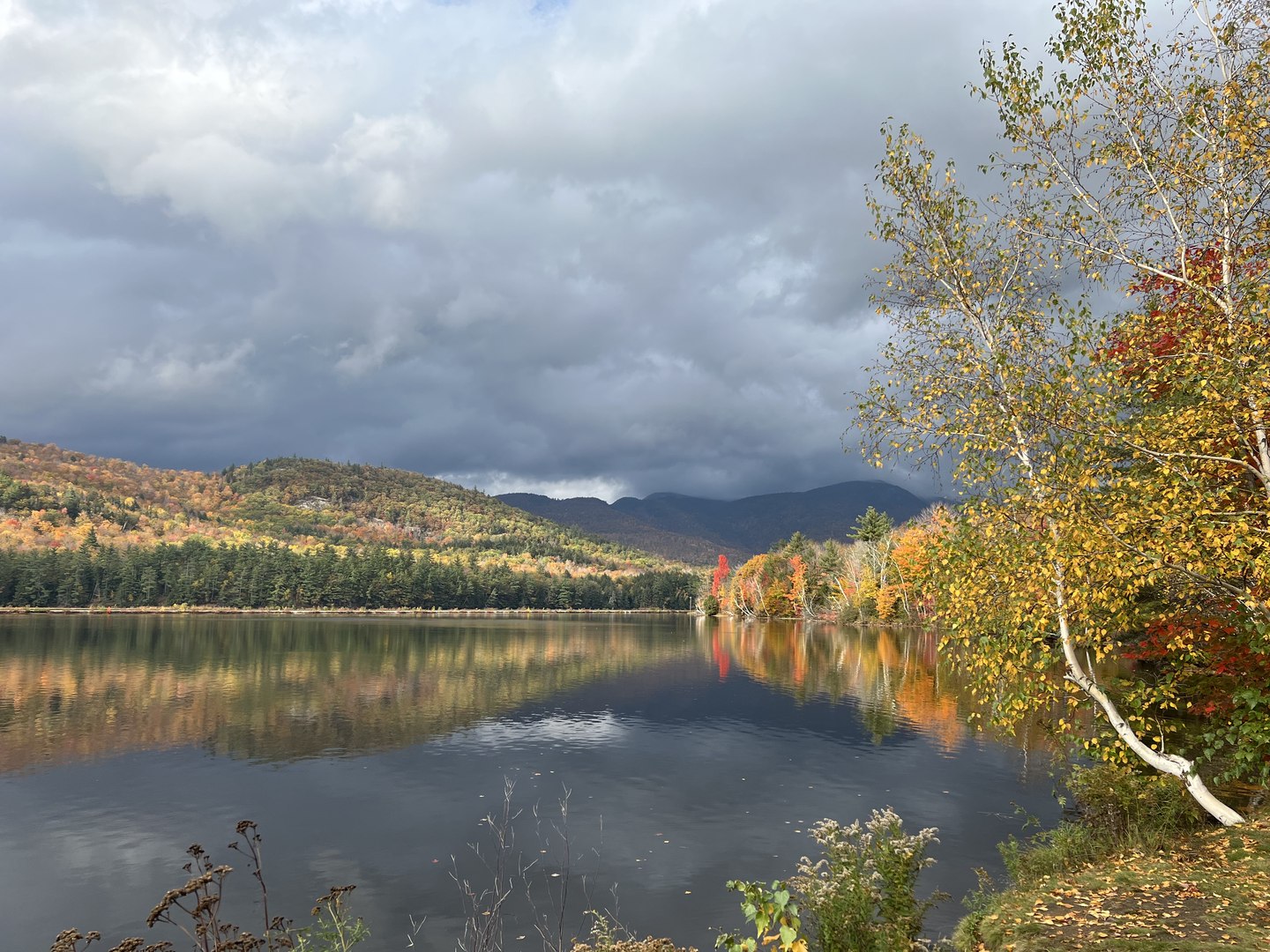
Look at the photograph here for a moment before reading further. Where did your eye go first: the pale sky, the autumn color, or the reflection?
There is no correct answer. But there is a good reason to look again.
First, follow a line
Choose the edge where the trees meet the sky. Follow it from one side of the picture to the other. Notice where it rises, where it dips, and where one tree stands apart from the others.
Now find the corresponding edge in the water. The reflection has to work with the surface it has been given. It may be recognizable without being exact. A color holds together longer than a branch. A dark shape survives even when its outline does not.
That small difference is part of what makes water worth photographing more than once.
Then, look for the quiet color
Autumn usually gets described with its loudest colors. Orange. Gold. Red. In an actual landscape, the grays and muted greens do a great deal of work, too. They give the bright patches somewhere to belong.
Pick the least dramatic color you can find in the image. Imagine removing it. Would the photograph feel warmer? Flatter? More crowded? A picture does not need every part of itself to compete for attention.
Finally, give the scene one sentence
Try writing a sentence about what you can see without using the words beautiful, peaceful, or stunning. Those words tell us your reaction. What detail caused it?
You might begin with a shape, a patch of light, or the place where the water stops looking like a mirror. Keep the sentence plain. You are making a note, not entering a poetry competition.
The next time you pass a familiar view, you may notice something you would have skipped before. That is one of the pleasures of returning to the same river. You know where you are, and there is still something left to see.