Some pieces of local history do not sit behind glass. They remain in the landscape, easy to pass until someone gives you a reason to ask what they are.
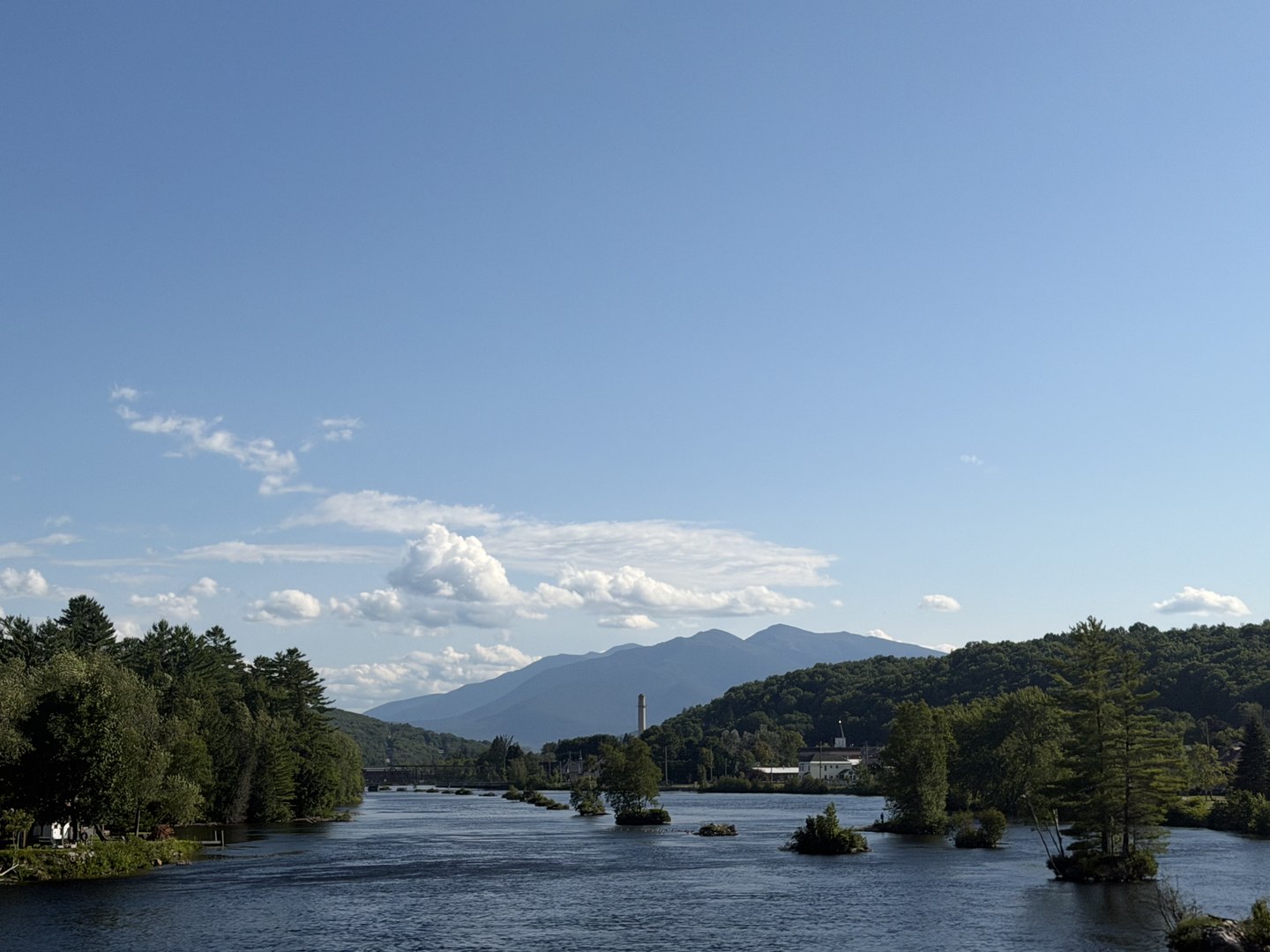
The boom piers in Berlin are a good example. Seen without context, they can look like small islands. With context, they become part of a system for moving and managing wood.
A job description in the water
New Hampshire’s Boom Piers historical marker explains that the structures anchored chains of boom logs during the annual drives. Brown Paper Company and International Paper Company shared the river; ownership marks and sorting helped direct the timber. The marker dates the end of the drives to 1963.
That brief explanation changes the view. Instead of isolated objects in the water, you are looking at remnants of an organized working landscape.
Try the before-and-after exercise
Imagine describing the scene before you know its history. You might mention shapes, vegetation, spacing, or how water moves around a structure.
Now describe it after learning what the piers supported. Different questions appear. How did people coordinate the work? What could a person on one bank see that someone on the other bank could not? Which parts of the job would a photograph capture, and which would remain outside the frame?
You do not have to invent answers. The questions themselves make an ordinary view more interesting.
More than picturesque leftovers
It is tempting to turn an old industrial feature into atmosphere and stop there. But a working river also means labor, skill, routine, and decisions made by people whose names may not be attached to the view.
One useful habit is to pair a landscape with a document. A marker offers a starting explanation. An archival photograph might add equipment, scale, or evidence of activity. A company record or an oral history could add another perspective. Each source sees part of the story.
A small river-history challenge
Choose one familiar structure near you—a foundation, a bridge pier, an old rail alignment—and write two lists: what you can observe, and what you would need to research. Keep them separate. A convincing guess is still a guess until the evidence catches up.
For this history stop, begin with the Boom Piers marker transcription and photographs. The original marker was erected by the New Hampshire Division of Historical Resources. Then return to the water and see whether the same shapes now ask different questions.