A familiar place can become almost invisible. You know the road, the bend, the line of trees. Your attention moves on to the errand, the next conversation, or the thing you forgot to put on the list.
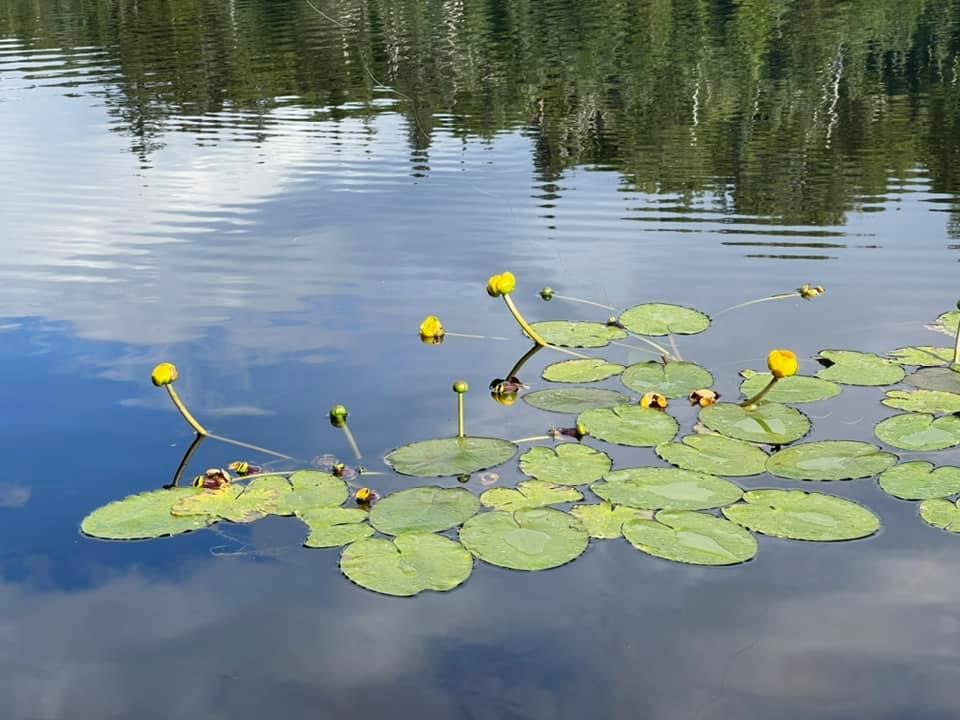
Here is a small game for seeing a place again. It works from a comfortable window, with a photograph, or while sitting somewhere you already have permission to be. You will need five minutes and something to write on.
Start with what is actually there
Write down three visible details. Make them specific enough that someone else could find them: a pale strip along the water, one branch leaning away from the others, a reflection broken near the bank.
Avoid deciding what the place means just yet. Begin with evidence.
Add a sound—or name the silence honestly
If you are there in person, notice the nearest sound and the most distant sound you can distinguish. Are they continuous, intermittent, or so ordinary you had stopped hearing them?
If you are looking at a photograph, do not pretend it proves what the place sounded like. Write “I imagine” before your sound note. That little phrase gives you room to be creative without confusing invention with observation.
Find the detail your body notices
What can you feel from where you are? The chair beneath you, a sleeve at your wrist, the temperature of the room. You do not need to touch a tree, enter the water, or taste anything outdoors to complete this exercise.
For smell and taste, you can note the coffee beside you or simply leave a blank. A field note does not fail because every sense did not report for duty.
Change one thing in your imagination
Now comes the invented part. Keep the location but change the hour. What might become more noticeable? What would be harder to see? Write three sentences and label them as an imagined scene.
You have just made two different kinds of notes: an observation and a possibility. Both can be useful. Keeping the distinction clear is part of the fun.
Finish before it becomes homework
Give your page a date and a plain title. Put it away. If you try again another day, compare the details you chose rather than judging which paragraph sounds more literary.
The goal is not to discover a secret meaning in every ripple. Sometimes it is enough to notice that you passed the same view twice and saw more the second time.